Empowered Voices, Inspired Journeys: From One of Few to Leading Many
Valuing the Stories of Our Women Deputy Deans
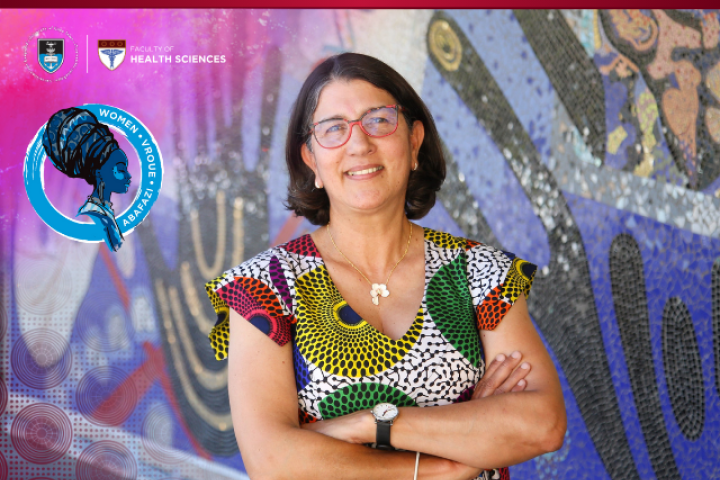
Professor Sharon Prince, Deputy Dean: Research, shares her journey from facing barriers as one of few Black women in science to leading cancer research that transforms lives and opens doors for others.
Women’s Month is a time to pause and reflect on the role that women collectively and individually played and continue to play in shaping the trajectory of South Africa and all that it encompasses. It is a moment for our individual journeys to be seen and heard and to honour the shoulders that we have stood on, the ceilings we have cracked and the paths we now lay for others.
Though my path as an academic leader and a cancer biologist has been shaped by science, it has also been profoundly influenced by people. I was raised by a strong mother and a father who was ahead of his time in the way he appreciated the strength of women, and I was supported by five exceptional sisters, two brothers, and I enjoyed the unwavering and boundless support and wisdom of my partner. My parents, who had little formal schooling, taught me the value of education, perseverance, social justice and that as a woman I could achieve anything I set my mind to. And my teachers, many of whom were underqualified but deeply committed to ensuring quality education for all, showed me the impact of believing in someone’s potential — a lesson that continues to guide my leadership.
I grew up during a time when very few women, and especially Black women, entered the scientific field. It shaped and influenced how I saw and engaged with the world. Growing up in a large family at a politically turbulent time in a socially and economically disadvantaged community taught me to stand up for what’s right, and to recognise that our destinies can differ greatly from those around us.
My own journey carried its share of hurdles. In 1981, I was accepted to the University of Cape Town (UCT) under the special dispensation, which allowed Black people to study at a “White” university. Getting in was only the start; finding the money to stay was the harder fight. I phoned organisation after organisation until I could finance my studies. Later, in academia, bias and the under-representation of women — and particularly Black women — became familiar territory. Often, I was the only woman, and sometimes the only Black woman, in the room. My ideas were dismissed until repeated by others. These moments sharpened my resolve rather than silenced me.
That determination led me to establish a diverse, internationally recognised cancer biology laboratory. This was more than a professional achievement; it has been a platform to equip and inspire scientists from disadvantaged backgrounds to be the best they can be. Watching students, especially Black women, flourish locally and globally has been deeply rewarding. One of my proudest moments was seeing a historically disadvantaged student present her work confidently at an international conference. I realised then that my work is not just about the science, but about creating environments where women can thrive, flourish and lead.
My leadership style is rooted in integrity, fairness and a strong belief in “paying it forward”. My activist background taught me the value of inclusive decision-making and giving voice to the under-represented. I lead collaboratively, set high academic standards and create a supportive environment that challenges individuals to excel while ensuring they feel valued and heard.
Looking ahead, I remain committed to developing targeted cancer therapies for poor and marginalised communities, translating our discoveries into accessible treatments, and focusing on cancers that disproportionately affect African women. But beyond the research, I would like my career to be remembered for breaking down barriers, opening doors for those who might otherwise have been excluded, and for building a research environment where excellence and inclusivity thrive together.
To my younger self and other young women, I’d say: Never underestimate the power of your voice, your abilities and what you can achieve. Don’t make yourself smaller to fit into spaces.