Paediatric Nursing Development graduate becomes a beacon of change

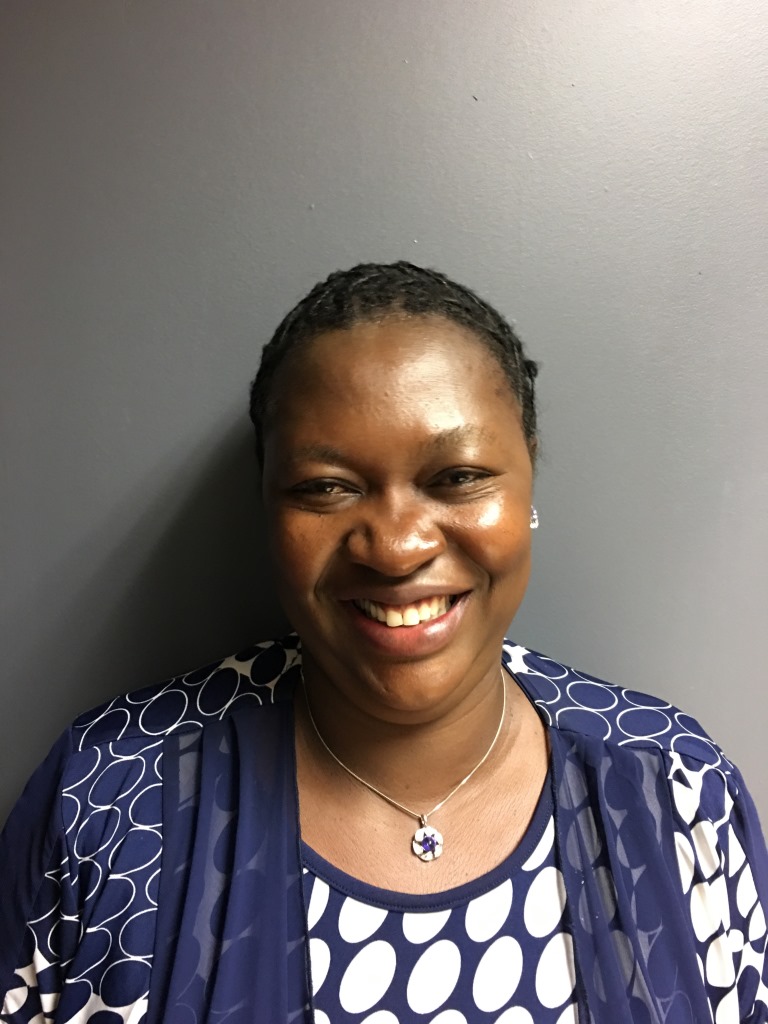
When Lydia Ssenyoga graduated with a Post Graduate Diploma in Child Nursing in 2010, she had no idea it would lead to playing a role in cultivating the future of paediatric nursing in Uganda. One of the first participants of the UCT Department of Paediatrics and Child Health’s Child Nurse Practice Development Initiative (CNPDI), Lydia has become a beacon of change in her field and at the hospital where she works.
Six years on, Ssenyonga is a Masters graduate and the Assistant Nurse Manager at CURE Hospital, a unique paediatric neurosurgical hospital which receives referrals for specialist surgeries from all over the continent. She is also a board member of the Ugandan Nursing Council and a representative of universities on the Uganda Nurses and Midwives Examination Board. Lydia credits her strong bond with the CNPDI team, based in the Division of Nursing and Midwifery at UCT, for helping her cope with the new challenges of leadership.
“The CNPDI followed me up, which is important for someone like me coming from a country with few resources…Instead of being excited [about the new responsibilities] I was scared. But I have been able to call on Professor Minette Coetzee who reassured me that this was a good step forward. They’ve [CNPDI team] taught me to handle conflicts and how to work out certain things in these roles because they have more experience. Support is there for me whenever I need it,” says Ssenyonga.
Some of the support has yielded far-reaching, remarkable results. In addition to educational work, the CNPDI programme team facilitates capacity building and assists its alumni with implementing the practices they learn on the programme. Last year, at Ssenyonga’s request, the CPNDI team travelled to CURE hospital to help improve care for children at the hospital.
Their work, tracking patient flow through the hospital, revealed a system that was slow and unfriendly to those admitted. Nurses complained of seeing patients who arrived at outpatients in the morning, late at night. Communication between staff was strained and confrontational. In light of this, the hospital streamlined its system to create a welcoming environment and improved staff relationships. The changes have made a positive impact on both patients and nurses.
Ssenyengo’s daily work continues to challenge practice in the hospital and advocates for the development of paediatric nurse training in Uganda. Only one centre teaches a postgraduate diploma in paediatric nursing and sometimes only one or two nurses graduate in the discipline annually. Lydia hopes her roles at the nursing council and examinations board will help to drive change and magnify the importance of this little recognised discipline. Her contributions to the development of paediatric nursing training include nominating nurses for the UCT African Paediatric Fellowships Programme scholarship. “If you have people who are trained on the same level they are less resistant to change. When they are not trained it is difficult for them to see why certain things are not beneficial to their work or the patient,” she says.
Once fearful of returning to the clinical environment after obtaining her Masters in 2014, Lydia now cherishes it for the opportunities it provides to generate rich knowledge and improve practice. Despite the challenges, she is optimistic about the future of paediatric nursing in her country. Ssenyengo’s goal is to see Uganda develop enough capacity to train nurses at home. Her partnership with the CPNDI programme, along with her various positions has her well placed to enable this.
“Addressing the human resource crisis in health care is key to reversing the trend of rising child mortality in Africa,” says Natasha North, Research Programme Director of CNPDI. Currently, just 2% of registered nurses in Southern Africa are trained paediatric nurses with the skills and knowledge needed to improve outcomes for acutely ill infants and children.
“A total of 213 nurses have graduated from our courses, from 9 African countries, and 100% of our programme graduates have returned to work in their home countries, and many go on to lead important developments in child health systems and services throughout Africa, “she adds.
The CNPDI programme team has already facilitated the establishment of new in-country training capacity in Kenya, Malawi and Zambia, and is working to establish 5 additional training hubs across Africa.