Transforming Healthcare Through Entrepreneurship

The healthcare system in South Africa is wrought with challenges. As a medical student, training in South Africa, it's difficult to ignore the moments when the inefficiencies in the system result in frustrated healthcare workers and poor patient care. The answers to some of the health challenges don't only lie within the healthcare system.
Having just returned from the 2014 Brightest Young Minds Summit, it's very clear that young people across sectors in South Africa are calling for new models of creating meaningful and sustainable impact. The concept of designing your own career is foreign to the healthcare sector, but changing the way young people are looking at the future. The emerging innovative thought-processes aimed at dealing with the numerous South African entrepreneurial and social problems can, and should be applied to healthcare. This is why Inclusive Healthcare Innovation is so exciting for us. Since it's launch in January of this year, we've been watching a community of healthcare workers, entrepreneurs, designers and students take up the challenge to re-imagine healthcare.
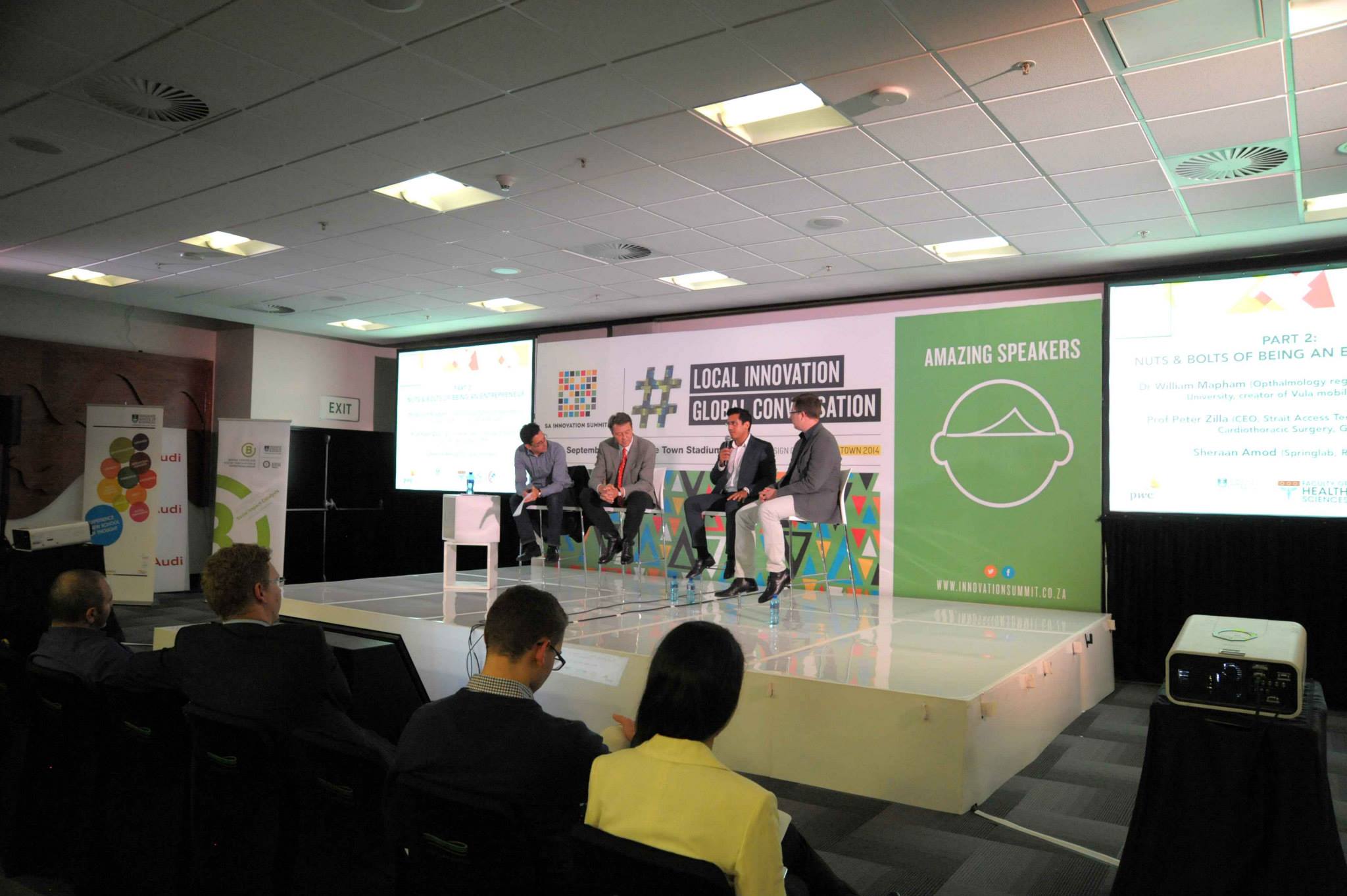
Photo by Eldi van Loggerenberg
On the 16th September, Inclusive Healthcare Innovation, together with PriceWaterhouse Coopers, hosted a panel discussion on Transforming Healthcare Through Entrepreneurship. The event was hosted ahead of PwC's Vision to Reality Awards, and ran in conjunction with the 7th Annual SA Innovation Summit âat the Cape Town Stadium, Cape Town. Inclusive Healthcare Innovation is also becoming the newest partner in the Centre for Health Market Innovation Network, identifying and studying innovative market-based solutions in health care delivery. This most recent seminar consisted of three parts, with panelists sharing their thoughts on the opportunities for entrepreneurship, the nuts and bolts of being an entrepreneur, and how organizations can scale for impact.
The event was attended by 200 people, from various backgrounds, including healthcare workers, entrepreneurs, designers and students. Clearly there is no shortage of fresh ideas and people passionate about healthcare. Although the healthcare need in the developing world is very different to that in the developed one, the innovation process does not need to be any different. Emerging market contexts provide rich opportunities to the pioneering entrepreneurs, and new market-based solutions targeted to those at the bottom of the pyramid can enable more Africans to receive access to high quality, affordable healthcare. And yet, why have we not tapped into this?
Sheraan Amod, founder of SpringLab and a new health startup, RecoMed, admits that doctors are incredibly tough to sell to. Not only is time a limiting factor, but the pitch has to be tight, and one has to be able to show that the impact of the healthcare innovation can be measured. When it comes to impact in healthcare, Etienne Dreyer believes that although data is important, we need to be able to interpret our data in order to improve care.
What sort of innovations does healthcare in Africa need?
Dr Peter Raubenheimer, Head of General Medicine at Groote Schuur Hospital suggests that the public healthcare sector is in need of organizational innovation, rather than simply devices, products or procedures. Referring to the first heart transplant, he notes that what was innovative then is routine now. Acknowledging that healthcare is a complicated space, cheap and local solutions may be the most meaningful.
How do we begin to make healthcare more inclusive?
According to Fazlyn Petersen, a Type 1 Diabetic, the real solutions lie out in the communities. She calls on healthcare workers and innovators to listen to the patients when developing ideas. The human-centered design model is not only relevant, but is becoming more frequently used in addressing healthcare challenges. When it comes to entrepreneurs who are not healthcare workers, and do not really understand how healthcare works, Dr William Mapham from Vula Mobile suggests that you need to get medical advisors and investors deeply involved in the company as soon as possible.
Photos from the Event
For more photos of the event, see here.