"Children in developing countries have access to fewer vaccines", Vaccinology participants told
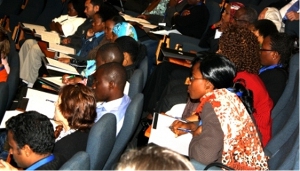
Attended by 76 in participants from a total of 18 African countries, the course aims to build capacity amongst Africans in various disciplines associated with vaccinology. Participants range from EPI managers, medical doctors, nurses, public health practitioners, academics, and scientists who work in the field of vaccinology from mostly countries in sub-Saharan Africa.
In its sixth year, the course has been conducted in Ethiopia, Ghana, Namibia and South Africa, and focuses on vaccine development, immunology, microbiology, clinical trials, safety, ethics, advocacy, economics, evidence-based medicine and immunisation delivery.
It is hosted by the Vaccines for Africa Initiative (VACFA), based at UCT's Institute for Infectious Diseases and Molecular Medicine (IIDMM), in partnership with VACFA stakeholders.
VACFA is a partnership of concerned individuals and organisations that have come together with the express purpose of increasing awareness of and promoting uptake of vaccines on the African continent. Founder of VACFA and Deputy Dean of Research at the University of Cape Town's Faculty of Health Sciences, Professor Hussey emphasised that vaccines were different to drugs in that it targets healthy people, particularly children.
He further highlighted the advantages of vaccines compared with pharmaceutical drugs, including cost-benefits (the relatively lower economic investment required in order to maximise public health), the fact that the vaccine need only be given once or very few times, and that vaccines have a higher safety profile. Although there was an increase in the number of vaccines included in the routine immunisation programmes, Professor Hussey noted that there remained concerns that the 'vaccination gap' between developed and developing countries was increasing, with children being the most affected. Consistent with the United Nations Convention on the Rights of the Child (Article 24), increasing access to immunisation programmes can stop unnecessary deaths from infectious diseases that are preventable, and have a huge impact on the health of a nation.