
UCT Environmental Health Students Actively Contribute to United Nations Chemical Risk Management Processes
Postgraduate students and graduates from the Division of Environmental Health programmes, under the convenorship of Prof. Andrea Rother, at UCT’s School of Public Health have been actively contributing to international decision-making on chemical risk management issues. They have been stellar ambassadors for UCT globally.
At the recent United Nations Global Framework on Chemicals (GFC) Open-ended Working Group (OEWG) meeting in Uruguay, June 24-27, 2025, several UCT students were actively participating. These included Dileep Kumar, Fredrick Otieno, Brenda Maphanga, Caroline Theka, and Vincent Chatendeuka - current and former students of UCT’s Master of Chemical Risk Management (MCRM) and the Postgraduate Diploma in Pesticide Risk Management (DPRM) programmes. The GFC unites stakeholders worldwide with a strategic plan - “to reduce harmful chemical impacts, promote safer alternatives, and protect human and environmental health across industries and supply chains” and has a multistakeholder, multisector approach (https://www.unep.org/events/conference/open-ended-working-group-oewg-global-framework-chemicals).
Each student actively contributed to key negotiations and played meaningful roles in the discussions in plenary, contact groups and in stakeholder day events. Caroline Theka is representing the Africa region by having taken on the leadership role as co-chair of the Africa Regional Group. Their participation reflects the Division’s strong emphasis on preparing students for real-world impact and global engagement relevant for protecting public health and particularly marginalised populations from exposure to hazardous chemicals.
Patrick Nyirenda, a graduate of the DPRM programme, represented Malawi at the United Nations Open-Ended Working Group (OEWG) on a Science-Policy Panel to Contribute Further to the Sound Management of Chemicals and Waste and to Prevent Pollution (SPP-CWP), held in Punta del Este, Uruguay, in June 2025. He played an active role throughout the process of establishing the Science-Policy Panel. The work began in 2022 and was completed on 20 June 2025, with the formal establishment of the Intergovernmental Science-Policy Panel on Chemicals, Waste and Pollution. (https://www.unep.org/news-and-stories/press-release/nations-come-together-establish-new-intergovernmental-science-policy)
UCT students have also been involved in other key chemical international negotiations. Caroline Theka and Suresh Amichand attended the recent Basel, Rotterdam, and Stockholm Conventions Conference of Parties (BRS COPs) in Geneva, from 28 April to 9 May 2025, which addressed the global management/trade of hazardous waste, persistent organic pollutants, and prior informed consent for the import and export of banned/restricted chemicals, respectively. The BRS COPs 2025 brought together representatives of governments from over 180 countries. Important decisions were adopted, strengthening the sound management of chemicals and wastes for the protection of human health and the environment. (https://www.brsmeas.org/2025COPs/Overview/tabid/9742/language/en-US/Default.aspx)
These significant contributions demonstrate how the Division’s academic programmes equip students with the tools to engage confidently in global forums. The Division is proud to support and mentor our students and future leaders working toward a toxic-free future that is more transparent and just.
Learn more about the Division of Environmental Health’s post graduate programmes: Environmental Health, School of Public Health
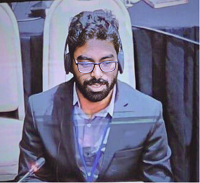
“Pesticide Regulation is a complex process, often dominated with economic interest that does not pay attention to adverse effects and huge indirect cost. However, global efforts and commitments based on science-driven processes are needed to protect ourselves and the planet from the harms caused by toxic pesticides. The PG DPRM course gave me insights on the adverse effects of pesticides and the possible mechanisms to address them nationally and globally. With the learnings from the course, I have been able to contribute to several publications that address the problems of pesticides in my country and demand stronger regulation and bans. This has opened up opportunities to join and contribute to international discourse on global pesticide regulation such as the BRS Convention and GFC chemicals.” - Dileep Kumar, India (DPRM 2019)
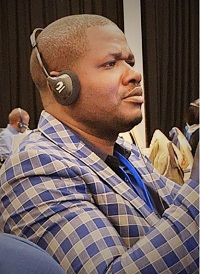
“Representing Zimbabwe, the region, and our continent at the OEWG for the Global Framework on Chemicals in Uruguay was an incredible experience! My Environmental Health studies gave me the tools to contribute to global conversations on chemical safety and sustainability.” - Vincent Chatendeuka, Zimbabwe (DPRM 2016)
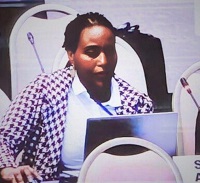
“My duties, amongst others, include research and preparing policy and discussion documents to inform South African negotiating positions on chemicals and waste multilateral environment agreements, specifically the Rotterdam Convention and the Global Framework on chemicals. Participating in the Global Framework on Chemicals (GFC) negotiations was a transformative experience that allowed me to apply the knowledge and skills gained through the Department of Environmental Health (DEH) Master’s in Chemical Risk Management programme to contribute to global decision-making on chemicals management. The program has equipped me with the confidence and expertise to engage effectively in international discussions and shape policy outcomes.” - Brenda Maphanga, South Africa (MCRM 2025 – current)
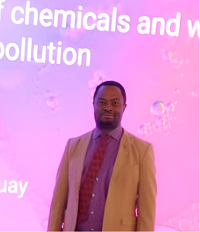
"Studying the Postgraduate Diploma in Pesticide Risk Management equipped me with critical knowledge and analytical skills that were invaluable in my contributions to establishing the Science Policy Panel on Chemicals, Waste, and Pollution. The program deepened my understanding of chemical risks and policy frameworks, empowering me to engage meaningfully in shaping global environmental governance." - Patrick Nyirenda, Malawi (DPRM 2013)
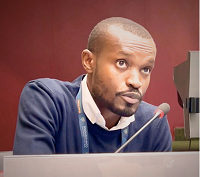
“Being in the negotiation room made me realise how important our voices are as professionals from the Global South - a region that has often been underrepresented in these spaces. It’s a privilege to contribute to global decisions that aim to reduce chemical health risks and protect communities worldwide.” - Fredrick Otieno, Kenya (MCRM 2022)
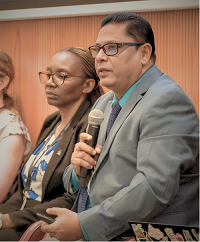
“My studies at UCT’s Division of Environmental Health provided a solid foundation that empowered me to participate confidently in international negotiations. The training deepened my understanding of global chemical governance and equipped me with the skills to effectively advocate for Africa’s interests.” - Caroline Theka, Malawi (DPRM 2015)
“Being part of these global meetings on chemicals showed me how much the training at UCT prepared us to think critically, speak with confidence and understand the complex issues associated with managing chemicals in a lifecycle approach.” - Suresh Amichand, Guyana (MCRM 2022, DPRM 2015)