
Tracking the World Health Organisation's attention to Firearm Violence, 2000-2025
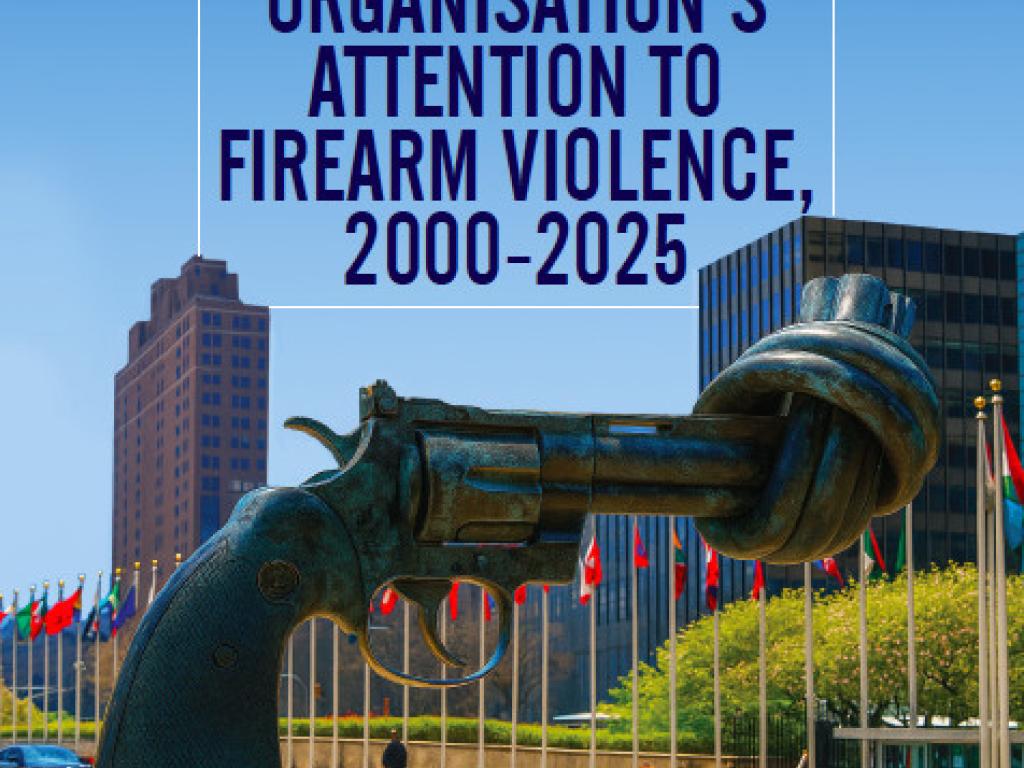
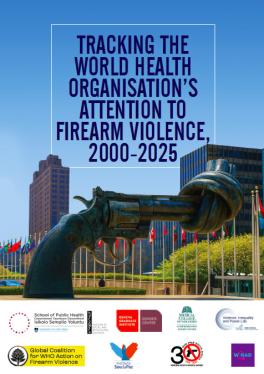
The Division of Social and Behavioural Sciences was one of seven co-publishers of a study on the World Health Organisation's attention to firearm violence, 2000-2025. Other co-publishers include academic centres and three NGOs from the global south.
The study examined 3,230 World Health Assembly (WHA) resolutions adopted between 1948 and 2024, reviewed WHO publications from 1996 to 2025, and conducted interviews with experts in global health governance to assess institutional engagement with firearm violence.
- Of 3,230 WHA resolutions, 39 refer to violence in any form. None mention firearms, despite violence being recognised as a public-health priority since 1996
- WHO attention to gun violence declined markedly after the mid-2000s, including in areas where firearms are a leading cause of death and injury;
- Significant gaps persist in WHO data, guidance, and policy leadership on firearms in relation to femicide, violence against children, community trauma, and mental health; and
- Gun violence remains largely absent from WHO work on social and commercial determinants of health, despite clear parallels with other regulated health-harming industries.
These finding sits uneasily alongside WHO’s declaration of violence as a public health priority in WHA49.25 (World Health Assembly, 1996) and the accumulating evidence that firearm injury represents a preventable and socially patterned health harm.
The WHO Constitution establishes a robust normative foundation for engagement with transnational health harms. Article 2 designates WHO as the “directing and coordinating authority on international health work.” Within this constitutional framework, firearm injury clearly falls within WHO’s competence as a preventable cause of death, disability, and mental health burden.
These research findings have generated significant momentum for advocacy focused on increasing the WHO's attention to gun violence. DSBS has played a key role in building the Global Coalition for WHO Action on Gun Violence, now comprising over 100 organisations from more than forty countries. The coalition spans a spectrum from local women’s rights and survivor-led organisations to global professional federations and academic networks, including trauma surgeons, public health associations, nursing and social work federations, child protection organisations, men’s health networks, and international medical bodies. This breadth reflects growing recognition across regions and sectors that firearm violence presents sustained challenges for health systems, prevention frameworks, and health equity. To join the coalition email info@whoaction.org.
See Summary
Download the Report