
Tolullah Oni: public health specialist with a global ambition
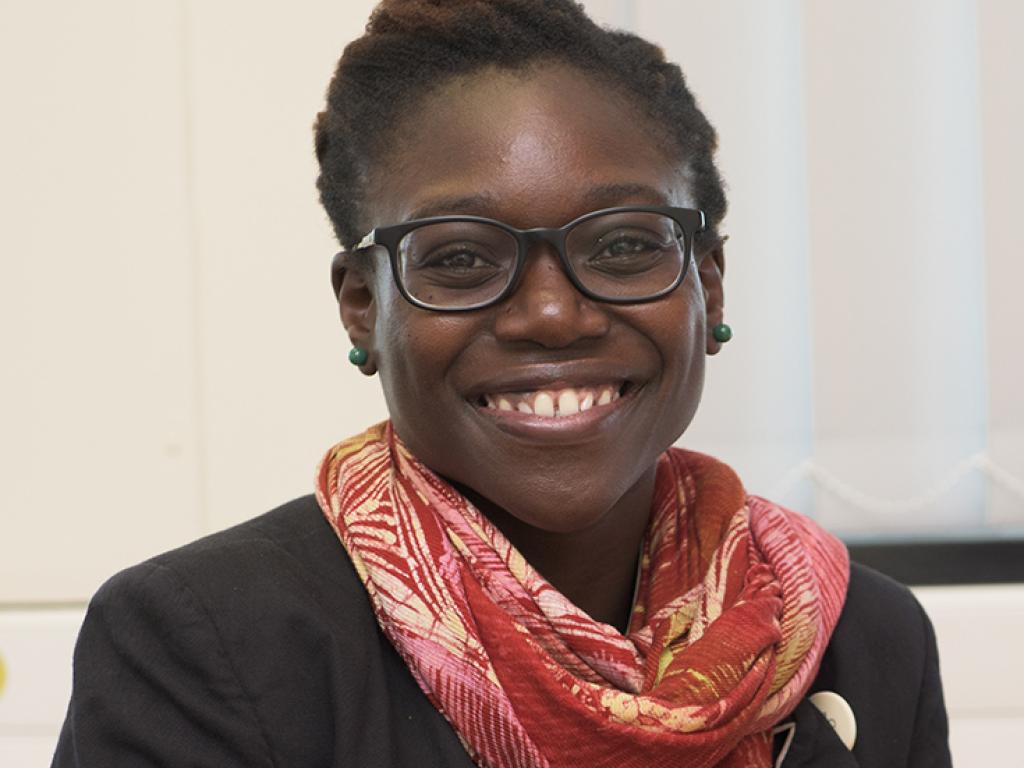
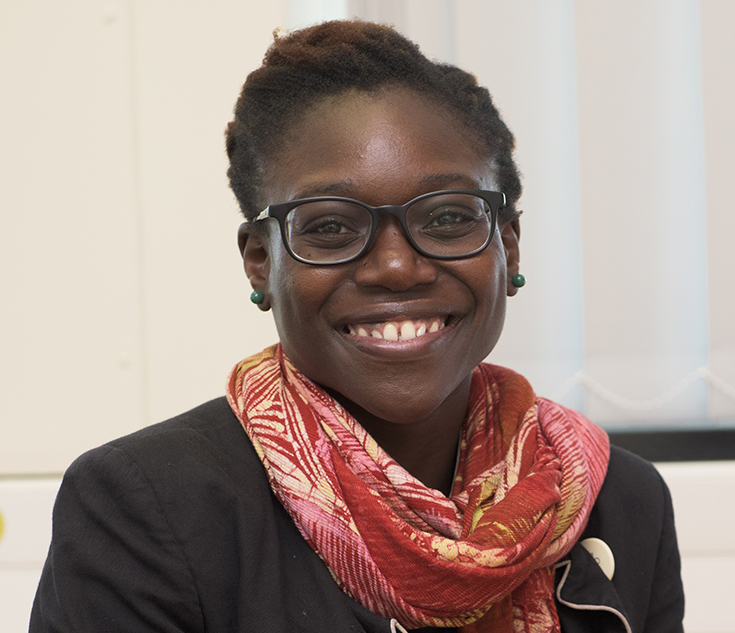
Nigerian by birth, Oni spent her ï¬nal school years in the UK before training in medicine at University College London (UCL). Oni recalls how, when she was about 7 or 8 years old and watching a documentary on open heart surgery, she had suddenly decided to become a doctor: more speciï¬cally, a paediatric cardiologist. The speciï¬city faded, but not the broader intention. The UCL course included the option of an intercalated BSc. Already interested in the wider determinants of health, Oni chose not to study a laboratory science but to embark on a degree in global health. “It gave me the opportunity of a year to think through the concept”, she recalls. “It was transformative.” But not immediately; the full fruits of the transformation were not to appear until several years later. In the meantime she did house jobs in the UK and Australia, and developed an interest in HIV and other infectious diseases.
This work took her back to Africa. A research medical oï¬cer post at UCT’s Institute of Infectious Disease and Molecular Medicine provided an opportunity to study tuberculosis diagnostics and work with co-infected HIV patients in South Africa. It was at this point that her public health training “came knocking”, as she put it. “I was contributing to service provision in a primary care clinic in Khayelitsha, the biggest township in Cape Town…and I realised there were social factors that were predisposing people to these conditions that I wasn’t looking at because it would make my research analysis too messy.” She realised it made no sense to ignore obesity, hypertension, diabetes, and other communicable diseases if you wanted not only to do research but also to tackle ill health as it really is in people’s lives.
“We often talk loosely about the intersection of infectious disease and non-communicable disease”, says Professor Valerie Mizrahi, Director of UCT’s Institute of Infectious Disease and Molecular Medicine. “But Tolu’s actually walking the walk, so to speak, in a community where we have an alarming collision of diï¬erent epidemics with an increase in diabetes and other obesity-related illnesses.” Oni’s transition to public health was formalised in a year spent as a public health registrar for the Western Cape Department of Health, and subsequently in her move to the UCT. She took up her present post in 2014. The Director of UCT’s School of Public Health and Family Medicine is Professor Mohamed Jeebhay. “Tolu’s become interested in urbanisation”, he says, “and we’d like to set up an institute to look at urbanisation and health as it relates to both communicable and non-communicable diseases.” This means taking account of housing, transport, education, and much else. A demanding task that will take Oni even further beyond a purely biomedical perspective. But she’s prepared for this, explaining that she’s learned to embrace complexity. “What I enjoy about urban health is that your investigations are decided by what is relevant, and not necessarily what you originally planned to look at.” This outlook drives her to seek broad collaborations.
In addition to her research, Oni is responsible for part of the medical school’s undergraduate teaching curriculum. In this capacity, and no doubt mindful of her own undergraduate experience, she has successfully lobbied for UCT to create its own intercalated BSc on global public health. “Until now”, she points out, “the teaching of global health has been very much from a global North perspective…This course will aim to shift the centre of gravity of that perspective to the global South. It will be the ï¬rst of its kind on the African continent.” Among the group advising her is John Yudkin, Emeritus Professor of Medicine at UCL. “She’s one of these people who’s an amazing networker, and she uses it to ï¬nd out who the experts are in a particular ï¬eld”, he says. And having found out, she tries to work with them to foment new thinking, new ideas, new plans. Jeebhay agrees: “She’s very innovative, always trying to think out of the box. She has the capacity to inspire young folk in science and medicine who are training in public health.” And how does she do it? Not just through being smart, Mizrahi suggests. “What really makes Tolu stand out is her engaging personality. She’s charisma personiï¬ed. She walks into a room and she lights it up… She’s small, she’s dynamic, and she’s got a fantastic smile. It’s interesting to watch the way she can bring people into her circle and energise it.” One of the goals of the NEF is to identify emerging leaders and those able to captivate non-scientiï¬c as well as scientiï¬c audiences. The evidence suggests that, in Oni, the NEF has made a sound choice.
Geoï¬ Watts
(www.thelancet.com Vol 387;1712 April 23, 2016)