Heart disease is preventable and treatable

Heart or cardiovascular disease is now a very common illness in South Africa and there is a need to emphasise education about the adverse effects of lifestyle choices and its contribution to the disease.
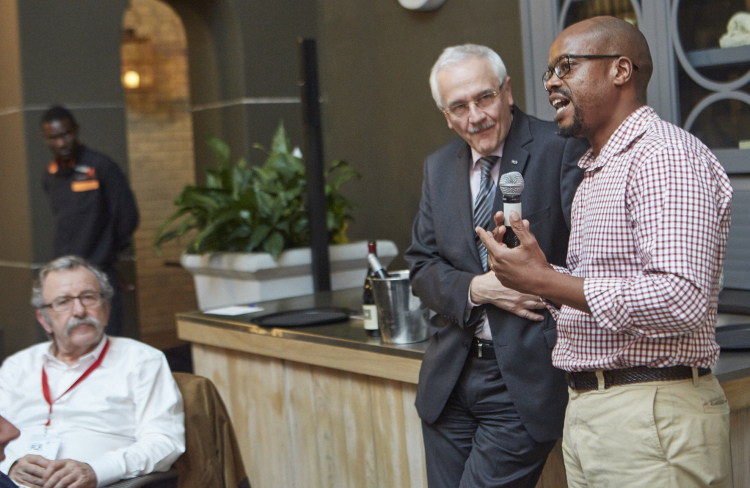
This is according to the Head of the University of Cape Town's Cardiology Department and Clinical Cardiologist, Professor Mpiko Ntsekhe on the side-lines of the recent second annual AfricaPCR congress.
The congress aims to provide specialists the opportunity of examining issues and exchanging ideas and clinical knowledge in the treatment of cardiovascular disease in Africa.
Cardiovascular diseases are a group of disorders of the heart and blood vessels. Some people are born with the disorder, others inherit them through genetic factors while some acquire them through lifestyle choices such as diet, smoking and lack of exercise. Finally infections can also damage the heart.
Heart attacks and strokes are forms of cardiovascular disease that are result from blockages of blood flow to the heart or brain. The blockages are caused by fatty deposits in the arteries.
Speaking to SABC Digital News, Ntsekhe says there is a need to emphasise the message that heart attaches and strokes can be prevented by many simple things people can do, such as to stop smoking, exercising eating well.
“Having done that it’s quite clear that unfortunately there are still going to be patients who are quite debilitated by the symptoms of heart disease, such as shortness of breath, fainting spells, heart attacks and heart failure. These patients will require a medical intervention to help.”
The salt intake across the board has become an important issue
He says, “Often the options available include cardiac surgery and, percutaneous interventional solutions. This meeting is part of a growing effort to grow medical capacity across Africa, to be able to provide both percutaneous and surgical solutions when required. Such treatments may allow patients to get back to their normal life, and to be able to make meaningful contributions to society. Many of these patients are breadwinners, or play important roles in their community and families and we can help them get back to doing that.”
Ntsekhe says one important contribution to cardiovascular disease in general across Africa is high blood pressure.
“ We know that 30 or 40 years ago high blood pressure amongst Africans was actually reported to be quite low and more recent data suggests that we have a very high prevalence of high blood pressure across all communities. This contributes quite a bit to the development of the entire spectrum of heart disorders including heart attacks and strokes.”
“The salt intake across the board has become an important issue. We as Africans consume a lot of salt relative to our counterparts across the world. As you know the minister of health is championing a public health campaign and program to reduce the amount of salt in high content foods like bread, to try to tackle the issues of high blood pressure across the population.”
The professor says the most commonly accepted postulate to explain the rise in cardiovascular disease, is the significant change over time in our collective lifestyle as a society.
Urbanisation and the accompanying pressures and stressors of surviving in modern society are taking a health toll in the form of an increase in the incidence of heart disease.
The congress also focused on how to integrate heart procedures into the continents health care delivery environment so that optimum cardiovascular care is possible.
With cardiovascular disease now being the leading cause of death in sub-Saharan adults over the age of 60, non-surgical heart procedures can play a role in prolonging and saving lives.
One of the procedures discussed at the meeting is the percutaneous coronary interventions (PCI).
According to Ntsekhe, “we are using PCI in South Africa, it is available mainly in major centres, in the major urban areas. More PCIs are performed in the private sector, than in the public sector because of cost. In the public sector they are limited to university and other tertiary hospitals because of expertise and expense which is quite high.”
The procedure is performed in a “cath lab” which is a dedicated theatre for diagnostic or therapeutic percutaneous techniques either……it’s like a theatre but operations don’t take place there. “
"For many patients what is attractive about PCI is that the procedure does not require a general anaesthetic, and can be done via a simple puncture into the peripheral artery with minimal invasion, leaving behind no scars, as there is no big operation, and they can be done quickly.”
Click below to listen to Mpiko Ntsekhe explain the PCI procedure.
Article By Lebo Tshangela - SABC news