
Research: Regional changes in TB disease burden among adolescents in South Africa
SATVI researchers Eric Wekasa Bunyasi, Mark Hatherill, Humphrey Mulenga, Angelique Luabeya, Justin Shenje, Simon Mendelsohn, Elisa Nemes and Tom Scriba have published a research paper titled "Regional changes in tuberculosis disease burden among adolescents in South Africa (2005–2015)" appearing in the PLOS ONE journal.
We describe subsequent temporal changes in adolescent TB disease notification rates for the decade 2005–2015.
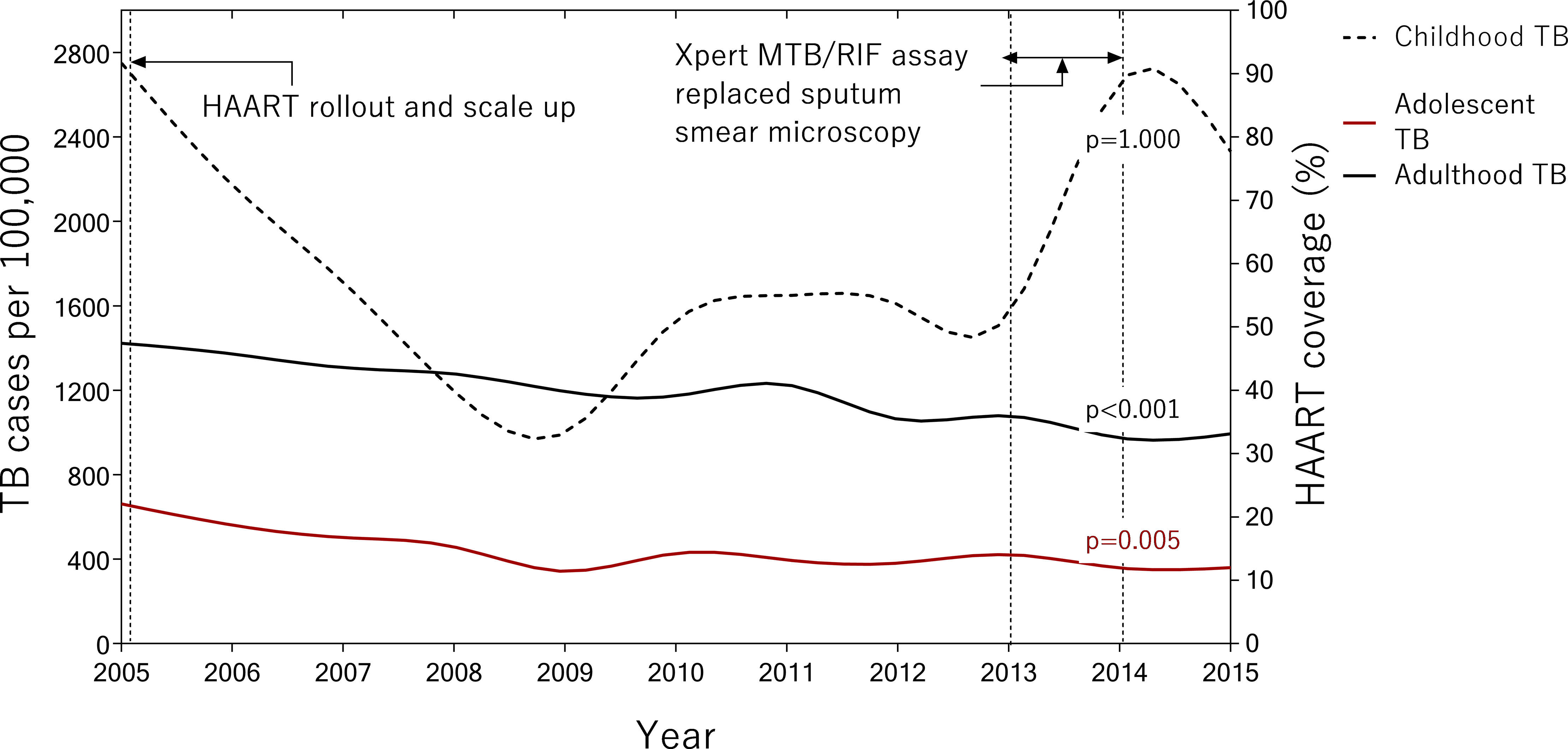
This study conducted an analysis of patient–level adolescent (age 10–19 years) TB disease data, obtained from an electronic TB register in the Breede Valley sub–district, Western Cape Province, South Africa, for 2005–2015. Numerators were annual TB notifications (HIV–related and HIV–unrelated); denominators were mid–year population estimates. Period averages of TB rates were obtained using time series modeling. Temporal trends in TB rates were explored using the Mann–Kendall test.
The study found that the average adolescent TB disease notification rate was 477 per 100,000 for all TB patients (all–TB) and 361 per 100,000 for microbiologically–confirmed patients. The adolescent all–TB rate declined by 45% from 662 to 361 per 100,000 and the microbiologically–confirmed TB rate by 38% from 492 to 305 per 100,000 between 2005–2015, driven mainly by rapid decreases for the period 2005–2009. There was a statistically significant negative temporal trend in both all–TB (per 100,000) (declined by 48%; from 662 to 343; p = 0·028) and microbiologically confirmed TB (per 100,000) (declined by 49%; from 492 to 252; p = 0·027) for 2005–2009, which was not observed for the period 2009–2015 (rose 5%; from 343 to 361; p = 0·764 and rose 21%; from 252 to 305; p = 1·000, respectively).
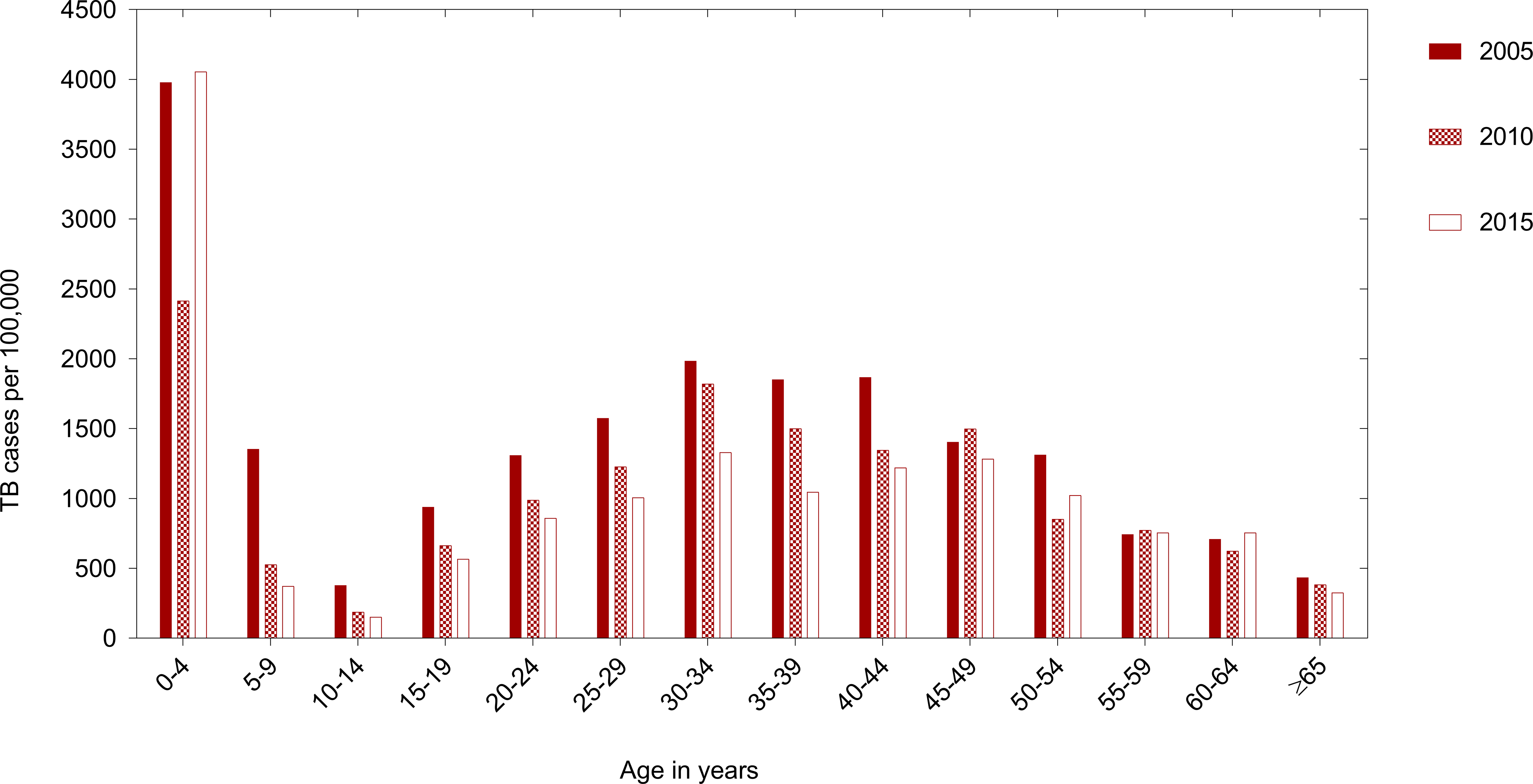
We observed an encouraging fall in adolescent TB disease rates between 2005–2009 with a subsequent plateau during 2010–2015, suggesting that additional interventions are needed to sustain initial advances in TB control.