The Boland Research Community Advisory Board, was established in 2008 and since then has grown into a established CAB. The current CAB composition was elected in 2014, and since then more or less 40% of the original CAB members remain committed to the CAB.
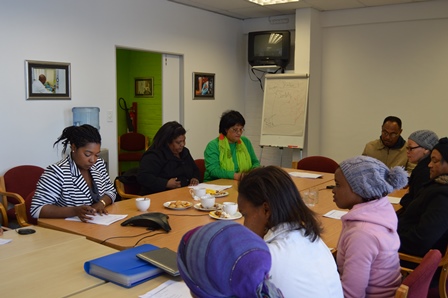
General CAB Meeting- June 2014
During 2014 the current members of the Boland Research Community Advisory Board (BR-CAB) were re-elected when it held its Annual General Meeting in April 2014 and have since achieved the following:-
- Adopted a constitution, and thereafter held monthly meetings of the CAB and Executive Committee.
- Participate in Good Clinical Practice training.
- Participated in an ACTG Conference in June 2014 and June 2015
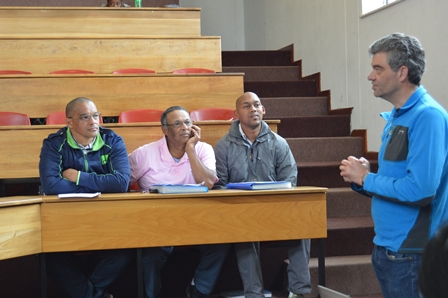
Dr Hennie Geldenhuys, Principal Investigator (PI) briefing CAB members on a study.
The SATVI site administration has participated in all the CAB meetings, in addition to providing administrative and logistical support, also updating the CAB members on progress with trial studies. The site has also supported the CAB with a specialist in the form of Reverend David Galetta,who is also the Global CAB Co-Chair and who has assisted the CAB to provide advice.
CAB and External Relations
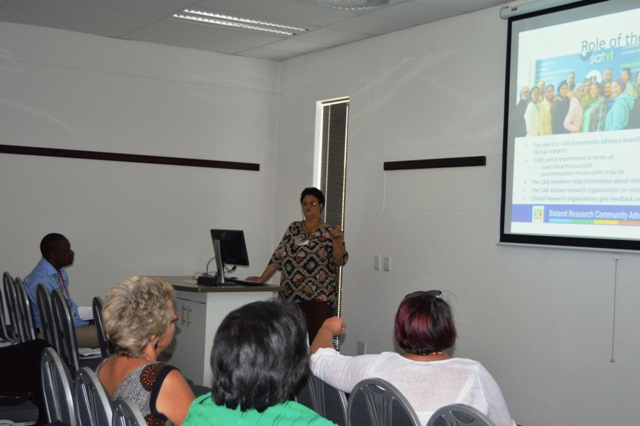
During March 2015 the CAB participated in the proceedings of the Rural Health Days organised by Ukwanda Rural Health School (University of Stelllenbosch) when the CAB chairperson presented a paper titled “Boland Research Community Advisory Board”. The CAB Is also a member of the ACTG network.
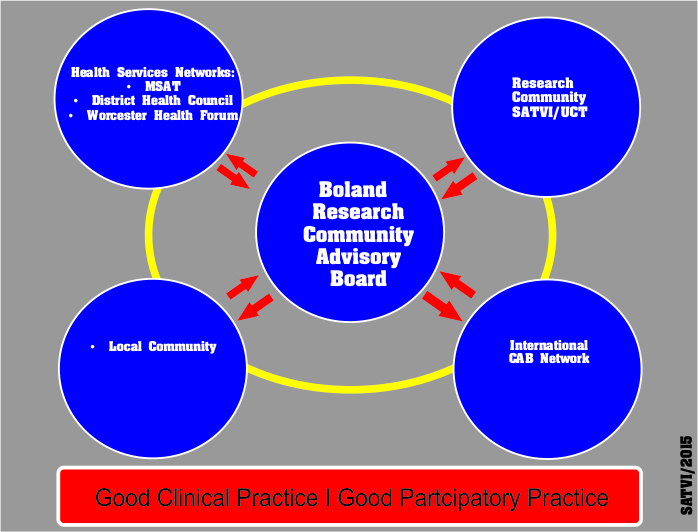
The Boland Research CAB also participated in the founding proceedings of the UCT Core CAB, a forum created by UCT comprising of CAB representatives from various CAB's within the UCT clinical research community.
Capacity Development
Members of the CAB were trained in Good Clinical Practice during June 2014.
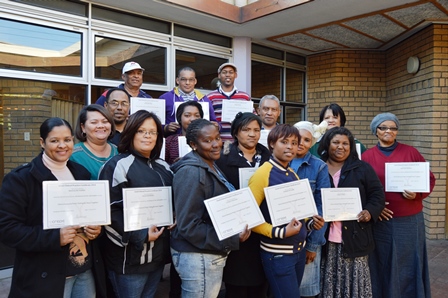
CAB Members completed Good Clinical Practice Training-June 2014.
Field Visit to Cape Town Laboratories of SATVI
During November 2014 the CAB was taken on a tour of the Cape Town SATVI laboratories and participated in a workshop on “The History of Tuberculosis and Correlates of Risk” by Dr Sara Suliman, a Postdoctoral Fellow.
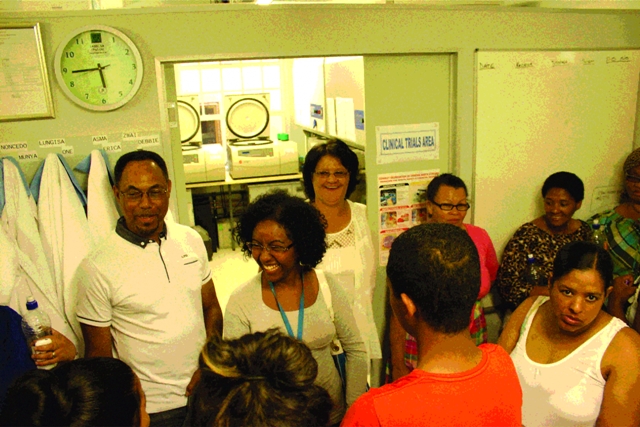
Visit to SATVI Laboratory at UCT, Cape Town- November 2014