
Research: Renewing the fight against TB with an old vaccine

Professor Val Mizrahi and Tom Scriba have co-authored a journal article titled "Renewing the fight against TB with an old vaccine" appearing in the Cell journal. Click here to view abstract.
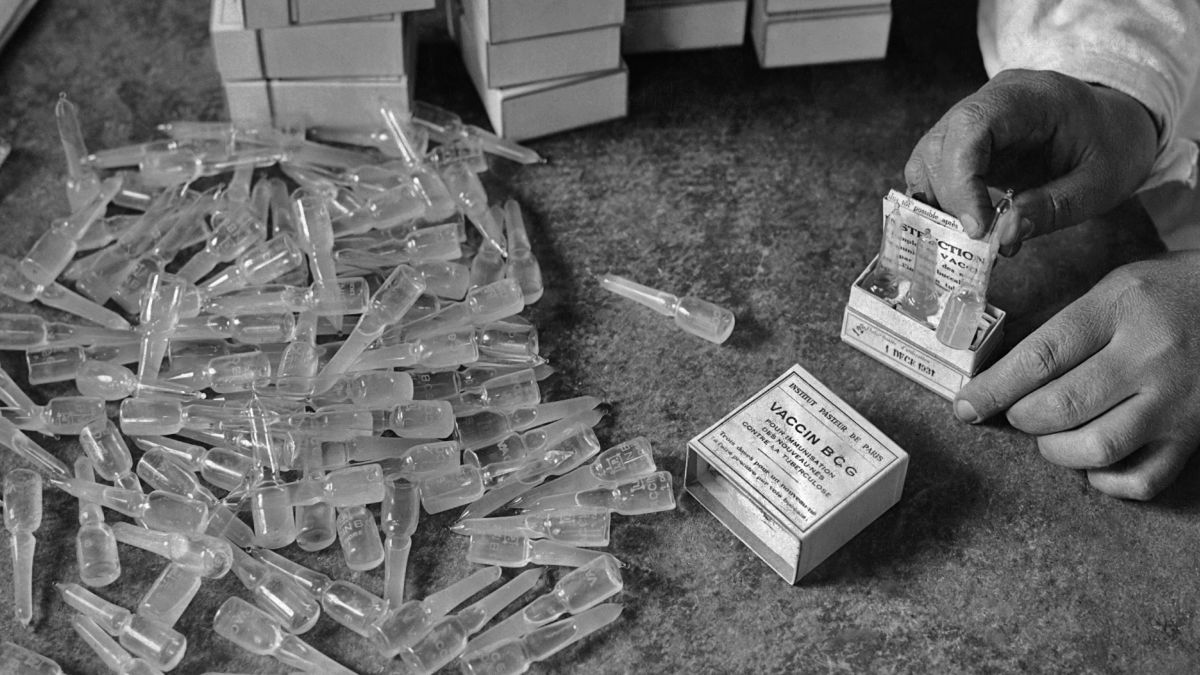
Background:
Prevention of pulmonary tuberculosis by vaccination has proven an elusive goal. In a recent study, Darrah et al. show that prevention of infection and disease can be achieved in non-human primates by intravenous administration of the century-old vaccine BCG. This finding heralds a step-change in the approach to TB vaccine development.
1.5 million lives in 2018, tuberculosis (TB) is the leading cause of death from a single infectious agent. The urgent need for new tools to control this disease cannot be overstated. The BCG vaccine, developed by Calmette and Guerin in the early 1900s and first used in humans 99 years ago, is a cornerstone of TB control.
Administered intradermally (i.d.) at birth, BCG is effective at protecting against disseminated and severe forms of TB in infants. However, BCG shows limited albeit variable efficacy in protecting against pulmonary TB in adolescents and adults. The reasons for the variability are unclear but may include exposure to environmental mycobacteria that provide some protection against Mycobacterium tuberculosis (Mtb) (Mangtani et al., 2014).
BCG was administered by intravenous (i.v.) injection, the association between the route of administration of BCG and its protective efficacy against TB has remained an open question.
Although studies conducted in non-human primates (NHPs) in the early ’70s pointed to improved efficacy when BCG was administered by intravenous (i.v.) injection, the association between the route of administration of BCG and its protective efficacy against TB has remained an open question. In a new study published recently in Nature, Darrah et al., re-visited this question by comparing the efficacy of BCG administered to adult rhesus macaques via i.v., low- (standard) or high-dose i.d., aerosol (AE), or combined AE and low-dose i.d. routes (Darrah et al., 2020).
The vaccinated animals were assessed in terms of leukocyte composition in bronchoalveolar lavage (BAL) and blood as well as immune responses over 24 weeks before being challenged with a highly virulent strain of Mtb. The outcome of Mtb challenge was monitored over 12 weeks using readouts of immunological response and disease pathology. Their results were unequivocal: BCG administered by i.v. injection was remarkably effective in protecting against Mtb challenge, with 6 out of 10 vaccinated animals showing no signs of infection and 9 out of 10 showing no signs of disease.
By comparison, no evidence of protection against infection or disease was observed after i.d. injection of the dose typically administered in humans, which was 100-fold lower than that given to the i.v. group. Interestingly, i.d. injection of the higher dose afforded the second-best level of protection, with 1–4 animals demonstrating some evidence of protection against infection and disease (Figure 1). This study follows hard on the heels of others that have shown that BCG revaccination is effective in preventing sustained Mtb infection in humans (Nemes et al., 2018), that the adjuvanted, fusion-protein vaccine candidate M72/ASO1E confers protection against progression to pulmonary TB disease in Mtb-infected adults (Tait et al., 2019), and that mucosal BCG administration (Dijkman et al., 2019) or immunization with a cytomegalovirus (CMV)-based vac cine (Hansen et al., 2018) also provided high-level protection against Mtb challenges in NHPs.