
Research: CSF immune response in HIV-1-associated cryptococcal meningitis: macrophage activation, correlates of disease severity and effect of antiretroviral therapy

SATVI author Associate Professor Tom Scriba has co-authored a paper titled "The CSF immune response in HIV-1-associated cryptococcal meningitis: macrophage activation, correlates of disease severity and effect of antiretroviral therapy" appearing in the Journal of Acquired Immune Deficiency Syndromes.
Methodology:
We enrolled persons ≥18 years with first episode of HIV-associated cryptococcal meningitis. CSF immune response was assessed using flow cytometry and multiplex cytokine analysis. Principal component analysis was used to examine relationships between immune response, fungal burden, intracranial pressure and mortality, and the effects of recent ART initiation (<12 weeks).
Findings:
CSF was available from 57 persons (median CD4 34/μL). CD206 (alternatively activated macrophage marker) was expressed on 54% CD14+ and 35% CD14− monocyte-macrophages. High fungal burden was not associated with CD206 expression but with a paucity of CD4+, CD8+, and CD4−CD8− T cells and lower interleukin-6, G-CSF, and interleukin-5 concentrations. High intracranial pressure (≥30 cm H2O) was associated with fewer T cells, a higher fungal burden, and larger Cryptococcus organisms. Mortality was associated with reduced interferon-gamma concentrations and CD4−CD8− T cells but lost statistical significance when adjusted for multiple comparisons. Recent ART was associated with increased CSF CD4/CD8 ratio and a significantly increased macrophage expression of CD206.
Conclusions:
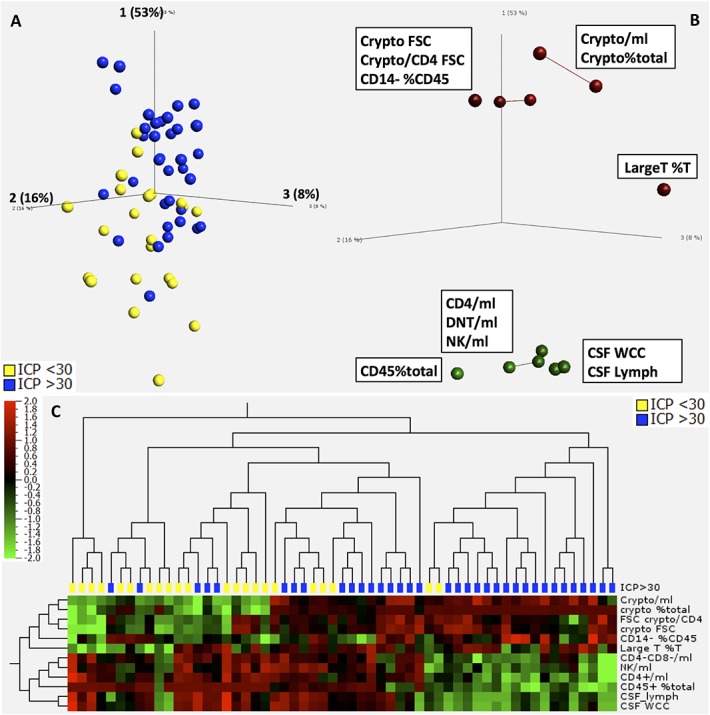
Paucity of CSF T cell infiltrate rather than alternative macrophage activation was associated with severe disease in HIV-associated cryptococcosis. ART had a pronounced effect on the immune response at the site of disease.