
A Review of Innate Lymphoid Cells in Helminth Infections

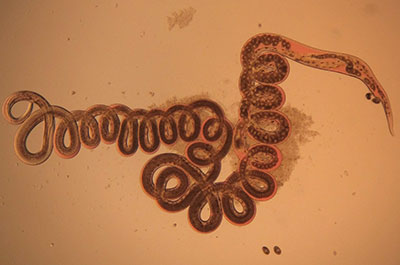
Katie and her co-authors investigated Innate Lymphoid Cells (ILCs) and their influence. ILCs play a “fundamental role in regulating barrier tissue homeostasis and the immune response
during inflammation”. However, helminth researchers are particularly interested in a subset of ILCs, ILC2s which are initiators and amplifiers of the type-2 immune response. Studies of ILC2s have utilised unadapted parasites or immune-compromised hosts, the review examines the generation and function of ILC2s in helminth infection and the “extent to which their roles may be essential or redundant, in both primary and challenge infections”.
The review also discusses ILC2s in the broader innate response which in exchange with the adaptive immune response allows the production of the anti-parasite response. ILC2s are known to be manipulated by helminths to benefit their survival and dampen system inflammation in the host, the review discusses how this occurs and how understanding this may be used to better control the disease.
Read the review - Innate Lymphoid Cells in Helminth Infections—Obligatory or Accessory?
Article by Bonamy Holtak