
Dr Parihar rated by the National Research Foundation

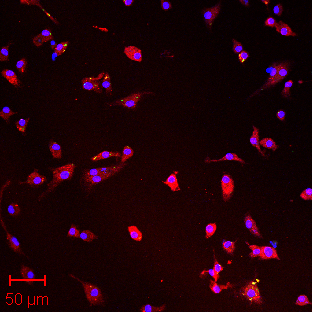
Mycobacterium tuberculosis is very well adapted to evade and exploit its hosts’ defensive systems1, and this is where Suraj’s interest lies—in host-pathogen interactions during infectious disease processes. Using mice as a model organism, he studies macrophage intrinsic killing functions against M. tuberculosis and Listeria monocytogenes for mechanistic insights which could lead to development of host-directed treatments as alternatives or adjuncts to pathogen-directed drug therapy.
Ultimately, he aims to identify and validate new drug targets using repurposed drugs and chemical activators/inhibitors, as well as by gene knockdown in human/mouse macrophages and gene-deficient murine models. Suraj uses diverse tools such as deepCAGE transcriptomics, metabolomics, systems biology, flow cytometry and confocal microscopy in his research, and serves as Platform Academic for CIDRI-Africa’s Basic Science platform. He is also assisting North-West University with set-up of a murine model of TB infection.
Although both incidence and mortality rates are falling worldwide, TB is the leading infectious cause of death. In South Africa, 438 000 people were estimated to have newly contracted TB in 2016; although 81% of new cases were successfully treated in the previous year, the success rate fell sharply for people who had multi-drug or rifampicin resistant TB, or extensively drug resistant TB2. Suraj’s work has the potential to translate into treatment methods which could reduce dependence on antimicrobials and thereby abate drug resistance.
View Dr Parihar’s Google Scholar profile
References:
1. Ernst, J. D. The immunological life cycle of tuberculosis. Nat. Rev. Immunol. 12, 581–591 (2012).
2. WHO. Global Tuberculosis Report 2017. WHO (2017). doi:WHO/HTM/TB/2017.23