Balancing risks: can one-month treatment safely prevent TB disease in people living with diabetes mellitus?
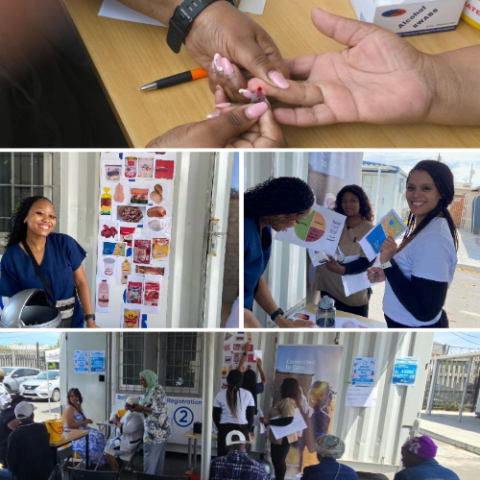
The Centre for Infectious Diseases Research in Africa’s BALANCE trial site at Khayelitsha Site B Community Health Centre (CHC), Cape Town screened its first participants in July 2025, and by December had enrolled more than 100 participants. Chief Investigator Prof. Molebogeng Rangaka leads the multi-site multi-country trial, a study investigating whether a new short-duration tuberculosis (TB) preventive treatment is safe and effective for people with diabetes who are at risk of developing TB disease.
The new one-month TB preventive treatment includes the antibiotics rifapentine and isoniazid (known as 1HP).1HP has been shown to prevent TB disease in people living with HIV and has other benefits since more people complete the short treatment and it causes fewer side effects than standard 6- or 9-month TB preventive treatment.
“We think this new shorter treatment may alter the balance of benefit against potential harms. If it works, this could result in a change in WHO policy in favour of providing 1HP TB preventive treatment to people living with diabetes,” said Prof. Rangaka. WHO does not currently recommend standard 6- or 9-month TB preventive treatment for people with diabetes who are not living with HIV or are recent contacts of people with active disease since it is not clear if the benefit would outweigh the risks of treatment. However, people with diabetes have an increased chance of developing TB disease and dying from TB.
1HP has not yet been studied in people with diabetes or people without HIV. The team plans to find the best strategy for TB prevention for people with diabetes who are HIV-negative and likely infected with the bacterium that causes TB.
Prof. Robert J Wilkinson, study collaborator, explained: “People who choose to participate will be randomly assigned by computer to either a group that receives enhanced diabetes care plus 1HP, or a group that receives enhanced diabetes care alone. We will monitor who develops TB disease and who develops side effects from the treatments in each group.”
More about the BALANCE trial
The “Benefit-risk of TB prevention treatment for people with diabetes” (“BALANCE”) trial will recruit a total of 3,100 people older than 15 with diabetes who live in the Philippines and South Africa; the trial will run for 5 years. The Philippines clinical research sites in the City of Dasmariñas and City of Muntinlupa, managed by CareCT, are expected to begin recruitment in the first quarter of 2026.
Photos contributed by MG Mahlaka RD(SA), Dietitian: Khayelitsha Site B CHC