The 20th Annual African Vaccinology Course (AAVC) | 3 – 7 November 2025
The 20th Annual African Vaccinology Course (AAVC) | 3 – 7 November 2025


In November 2025, the Vaccines for Africa Initiative (VACFA) hosted its 20th Annual African Vaccinology Course (AAVC). A milestone event that marks two decades of strengthening Africa’s vaccinology capacity.
Since its inception in 2005, the AAVC has trained 1,223 participants from 49 African countries, drawing participants from national and sub-national governments, the private and public health sectors, academia, NGOs and civil-society organisations.
The course was developed in response to a clear and pressing need: Africa’s urgent demand for vaccinology expertise, and the lag in vaccine programme implementation relative to the rest of the world. From the outset, VACFA has advocated for African-led, home-grown skills to support immunisation programmes tailored to the continent’s needs.
Speaking at the gala dinner hosted to celebrate this milestone, UCT’s Dean of Faculty of Health Sciences, Professor Lionel Green-Thompson, congratulated those who had the vision for this course 20 years ago, and praised the AAVC as a prime example of African-led solutions:
“This is a story about Africans building capacity on the African continent. Tonight’s celebration is about recognising the slow, steady work of strengthening health systems on the continent so that vaccines can reach the communities and specifically children who need them the most.”
“It also represents the constant and incremental realisation of the rights of Africans to access necessary care. And in the case of vaccinations for children especially, this is the kind of care that promises them a brighter future,” he added.
For VACFA, investing in African vaccinologists is essential. This is part of their investment in sustainable immunisation systems, enabling evidence-informed policymaking, and safeguarding public health today and for generations to come.
To ensure those who will benefit most from the AAVC can access it, including those in very resource-scarce environments, VACFA secures funding through various partners, including pharmaceutical companies, to cover the participants' cost.
The AAVC is grounded in four interconnected aims: advocacy and awareness; capacity development; partnerships; and evidence-based research. The course content is deliberately tailored to respond to the continent’s specific and shifting challenges. Participants engage deeply with topics such as vaccine design and development, health-system preparedness, regulatory considerations, the logistics of vaccine rollout, and the increasingly important issues of misinformation and vaccine hesitancy.

Sessions are delivered by experts who not only teach the science but also share their lived experiences of working within African immunisation systems. Beyond the classroom, the AAVC is designed to cultivate a connected, supportive community.
Also speaking at the gala dinner, Dr Edina Amponsah-Dacosta, co-convener of the AAVC and evidence-informed decision-making specialist at VACFA, described how the AAVC is about building a “strong, connected regional community of practice, made up of a network of AAVC alumni, faculty, mentors and partners who collaborate across communities, share solutions and respond to shared challenges.”
“The AAVC is not simply a course, it is a community and it is a movement to amplify African voices in public health, protect the progress we have made so far, and work towards protecting those communities on the continent most vulnerable to vaccine-preventable diseases.”
The impact of this approach is clear in the trajectories of the course’s alumni. Constance Sakala, immunisation specialist and executive secretary of the Zambian National Immunisation Technical Advisory Group, completed the course in 2014. She described it as pivotal in shaping her leadership with Zambia’s Expanded Programme on Immunisation.
“The knowledge and skills acquired boosted my confidence for leadership roles in Zambia’s Expanded Programme on Immunisation,” Sakala said. “I used my knowledge from the AAVC to support evidence-based decision making processes, developing vaccine delivery strategies, supporting and reinforcing vaccine surveillance and supply chain systems in Zambia, among other effective contributions.”
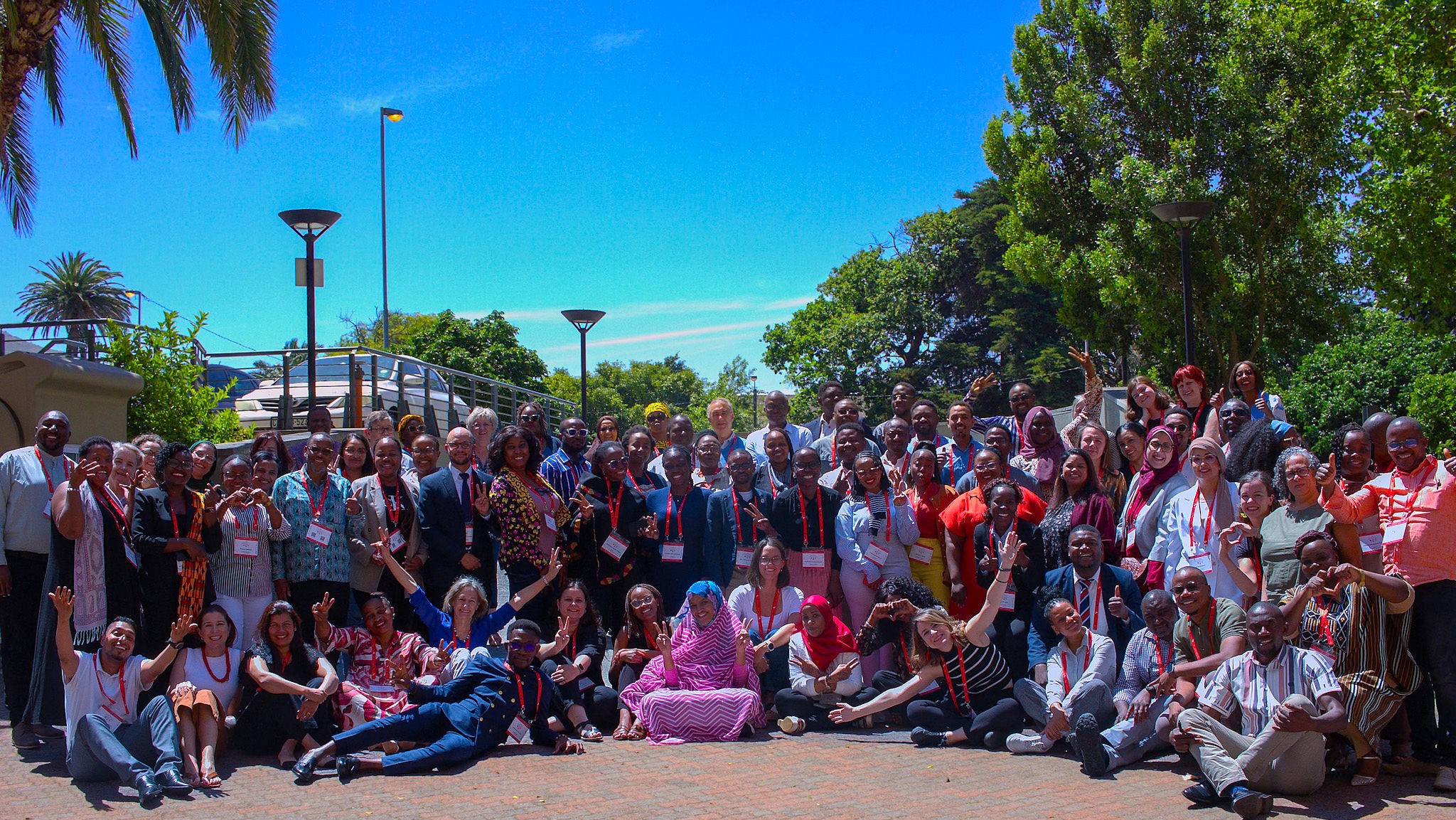

The 2025 cohort included both in-person delegates in Cape Town and virtual attendees from across the continent.
Vaccines are not new to Africa. The diary of a Boston slave owner in the 1700s gives an account of how his west African slave, a man named Onesimus, described how he was inoculated against the dreaded smallpox in his home country in Africa. Yet despite this deep history, African countries today shoulder some of the world’s highest burdens of infectious disease.
The continent faces regular public-health emergencies, from cholera and measles to Ebola, often exacerbated by humanitarian crises, conflict, and climate-related disruptions. While vaccines remain one of the most effective tools in global health, too many African communities still lack reliable access to them.
According to the African Centres for Disease Control (CDC) more than 500,000 African children under the age of five still die annually from vaccine-preventable diseases and over 30 million children suffer from these diseases each year.
Globally however, vaccines are a good news story. According to World Health Organisation figures, immunisation programmes prevent approximately three million deaths globally from vaccine preventable diseases like diphtheria, measles, mumps, tetanus and others.
The goal remains to overcome the many challenges to universal rollout of vaccines across the continent. While access is growing there are still significant inequities in vaccine access and coverage between and within countries. Even relatively wealthy cities such as Cape Town see wide disparities of access.
Health systems, infrastructure and vaccine hesitancy and misinformation are all serious issues to be overcome if we are to achieve the VACFA vision of contributing to an Africa free of vaccine preventable diseases. These challenges underscore exactly why vaccinology capacity building, the core mission of VACFA and the AAVC, is so vital.
A resilient immunisation ecosystem requires African scientists, programme leaders, policymakers and communicators who understand the realities on the ground and can design context-appropriate solutions. The AAVC strives to empower credible, trusted and confident champions of vaccination on the continent.
Leaders who understand community dynamics, political realities, cultural histories, and the science itself. These are the voices that can speak for African women and children, advocate for their right to health, and drive equitable access to life-saving vaccines.