Bioinformatics
COIN uses bioinformatics to decode genomic data, identify disease-causing variants, and build tools that represent African genetic diversity in precision medicine.

Bioinformatics sits at the intersection of biology, computer science, statistics and mathematics, transforming complex biological data into meaningful insights. In genomics, it allows us to make sense of the enormous volume of information generated by modern sequencing technologies. From DNA and RNA to proteins and metabolites, bioinformatics helps decode how genes are regulated, expressed and linked to disease.
At COIN, bioinformatics underpins much of our work. We use it to process and interpret sequencing data, identify patterns in genetic variation and uncover how changes in DNA contribute to neurological and neuromuscular disease. The field is built on key biological principles such as the flow of genetic information from DNA to RNA to protein, and spans several major domains: genomics, transcriptomics, proteomics and metabolomics. Together, these layers of information reveal the molecular signatures that drive health and disease.
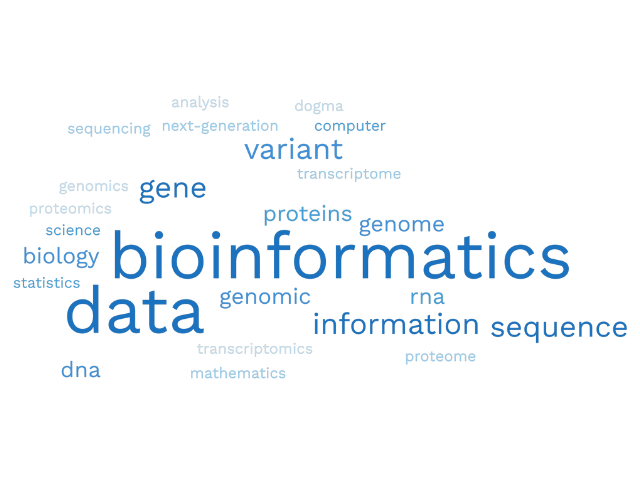
Core processes such as sequence alignment, genome assembly, variant calling and gene expression analysis form the foundation of modern bioinformatics. By applying these methods, we can detect and interpret genomic alterations like single nucleotide variants (SNVs), copy number variants (CNVs) and structural variants (SVs). Increasingly, multi-omics approaches are allowing researchers to integrate these datasets and capture a more complete picture of biological systems.
Yet, important challenges remain. Many disease-associated variants occur in poorly characterized regions of the genome, particularly in African populations that are underrepresented in global reference datasets. Structural variants and repetitive elements are often missed by short-read sequencing, and current algorithms still struggle to accurately interpret complex or noncoding variation. To overcome these limitations, our team is exploring new strategies such as pangenome references, machine learning and multi-omic data integration to improve variant discovery and interpretation in African genomes.
Why this Research Matters
Bioinformatics is at the heart of precision medicine. It enables researchers and clinicians to translate raw sequencing data into knowledge that can improve diagnosis, treatment and prevention. At COIN, we develop and apply computational tools, algorithms and analysis pipelines to better understand the genetic causes of neurological and neuromuscular disorders. By integrating bioinformatics into our research and diagnostic workflows, we can prioritise candidate genes, identify pathogenic variants and reveal the molecular pathways involved in disease.
In Africa, bioinformatics is also key to representation and equity in global genomics. As sequencing capacity grows across the continent, bioinformatics allows African researchers to interpret local data and build population-specific resources. This is essential for accurate variant classification, improved diagnosis and fair participation in global genomic discovery.
Collaborative initiatives such as H3ABioNet, the African Bioinformatics Institute (ABI), the African BioGenome Project (AfricaBP) and the African Centres of Excellence in Bioinformatics and Data-Intensive Science (ACE) are driving capacity building and innovation. By contributing to this growing network, COIN aims to help advance the continent’s bioinformatics landscape — ensuring that data from African patients leads to discoveries that benefit both Africa and the world.