What happens when the discovery isn't new, but the system is? This case report shows that rare disease genomic diagnosis can be completed entirely in South Africa, providing local evidence for the future of genomic medicine.
For many people, the image of a genetic counsellor is someone sitting in a clinic room, helping families understand a diagnosis but increasingly, genetic counselling is extending far beyond clinic walls.
Rare diseases are described as “rare” in theory; in reality, they are lived daily, repeatedly and often in isolation. For many, this translates into healthcare fragmentation; long diagnostic journeys, unclear referrals...
At Rare Diseases South Africa (RDSA), our work is rooted in a simple belief: every person deserves a diagnosis, a community and a chance at a full and supported life.
Decoding Africa's genetic diversity to transform healthcare—where cutting-edge omics meets informatics to deliver precision medicine that reflects our populations and redefines our future.
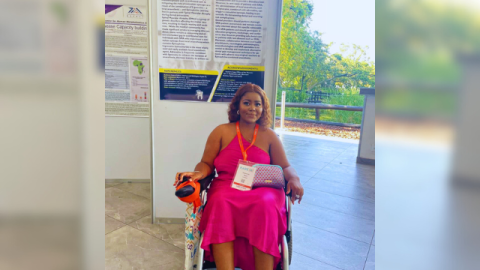
Diagnosed with SMA 25 years ago, I rejected "that's just the disease" to become a patient-partner in research. True collaboration values all lived experience, not just "exceptional" patients—transforming medicine through shared knowledge.
Global ancestry shows the big picture—your overall heritage. Local ancestry zooms in, revealing which parts of your genome come from specific ancestral backgrounds, crucial for understanding disease risk in admixed populations.
A reflection on genomics as biological memory. Genetic counselling translates DNA's complex language - through pre-test discussions, variant interpretation, and shared understanding - helping people find meaning in their genes.
What happens when the discovery isn't new, but the system is? This case report shows that rare disease genomic diagnosis can be completed entirely in South Africa, providing local evidence for the future of genomic medicine.
Decoding Africa's genetic diversity to transform healthcare—where cutting-edge omics meets informatics to deliver precision medicine that reflects our populations and redefines our future.
What happens when the discovery isn't new, but the system is? This case report shows that rare disease genomic diagnosis can be completed entirely in South Africa, providing local evidence for the future of genomic medicine.
Decoding Africa's genetic diversity to transform healthcare—where cutting-edge omics meets informatics to deliver precision medicine that reflects our populations and redefines our future.
Global ancestry shows the big picture—your overall heritage. Local ancestry zooms in, revealing which parts of your genome come from specific ancestral backgrounds, crucial for understanding disease risk in admixed populations.
What happens when the discovery isn't new, but the system is? This case report shows that rare disease genomic diagnosis can be completed entirely in South Africa, providing local evidence for the future of genomic medicine.
For many people, the image of a genetic counsellor is someone sitting in a clinic room, helping families understand a diagnosis but increasingly, genetic counselling is extending far beyond clinic walls.
Rare diseases are described as “rare” in theory; in reality, they are lived daily, repeatedly and often in isolation. For many, this translates into healthcare fragmentation; long diagnostic journeys, unclear referrals...
At Rare Diseases South Africa (RDSA), our work is rooted in a simple belief: every person deserves a diagnosis, a community and a chance at a full and supported life.
Diagnosed with SMA 25 years ago, I rejected "that's just the disease" to become a patient-partner in research. True collaboration values all lived experience, not just "exceptional" patients—transforming medicine through shared knowledge.
A reflection on genomics as biological memory. Genetic counselling translates DNA's complex language - through pre-test discussions, variant interpretation, and shared understanding - helping people find meaning in their genes.
Global ancestry shows the big picture—your overall heritage. Local ancestry zooms in, revealing which parts of your genome come from specific ancestral backgrounds, crucial for understanding disease risk in admixed populations.
Rare diseases are described as “rare” in theory; in reality, they are lived daily, repeatedly and often in isolation. For many, this translates into healthcare fragmentation; long diagnostic journeys, unclear referrals...
Diagnosed with SMA 25 years ago, I rejected "that's just the disease" to become a patient-partner in research. True collaboration values all lived experience, not just "exceptional" patients—transforming medicine through shared knowledge.
What happens when the discovery isn't new, but the system is? This case report shows that rare disease genomic diagnosis can be completed entirely in South Africa, providing local evidence for the future of genomic medicine.
For many people, the image of a genetic counsellor is someone sitting in a clinic room, helping families understand a diagnosis but increasingly, genetic counselling is extending far beyond clinic walls.
Rare diseases are described as “rare” in theory; in reality, they are lived daily, repeatedly and often in isolation. For many, this translates into healthcare fragmentation; long diagnostic journeys, unclear referrals...
At Rare Diseases South Africa (RDSA), our work is rooted in a simple belief: every person deserves a diagnosis, a community and a chance at a full and supported life.
A reflection on genomics as biological memory. Genetic counselling translates DNA's complex language - through pre-test discussions, variant interpretation, and shared understanding - helping people find meaning in their genes.
What happens when the discovery isn't new, but the system is? This case report shows that rare disease genomic diagnosis can be completed entirely in South Africa, providing local evidence for the future of genomic medicine.
At Rare Diseases South Africa (RDSA), our work is rooted in a simple belief: every person deserves a diagnosis, a community and a chance at a full and supported life.
Decoding Africa's genetic diversity to transform healthcare—where cutting-edge omics meets informatics to deliver precision medicine that reflects our populations and redefines our future.
A reflection on genomics as biological memory. Genetic counselling translates DNA's complex language - through pre-test discussions, variant interpretation, and shared understanding - helping people find meaning in their genes.