event
Repair, Reuse, Salvage: Bringing African Practices of Repair and Salvage into Dialogue with AI Ethics
26 November 2025

What can the everyday ethics of repair, reuse, and salvage teach us about the moral life of AI?
Across African cities, technicians and recyclers sustain technological life amid scarcity, toxicity, and neglect. Dr. Samwel Moses Ntapanta, rethinks AI ethics through these grounded practices of care, resilience, and endurance — revealing new ways to imagine ethical and sustainable digital futures.
In this webinar, we rethink AI ethics through the lens of repair and salvage practices. Across many African cities, technicians, recyclers, and community innovators sustain technological life amid scarcity, toxicity, and infrastructural neglect. Their everyday work of repair, reuse, and recycling embodies ethical reasoning that is relational, improvisational, and grounded in care— ethics that emerge not from abstract principles but from the material demands of keeping life and technology going under precarious conditions.
Reading these repair ecologies across the AI stack, from end-user devices and sensor assemblages to data-centre hardware and their waste streams, clarifies how AI’s “innovations” depend on ongoing maintenance labour and toxic afterlives.
By tracing how discarded electronics, digital tools, and circular-economy initiatives are repurposed in Tanzania and Kenya, I argue that these practices articulate additional critical perspectives beyond dominant AI-ethics frameworks that focus narrowly on bias, transparency, or privacy. They reveal a broader moral horizon: one that accounts for the material and ecological afterlives of AI, its extractive infrastructures, and the uneven geographies of its waste. Situating repair and salvage within technologies of imagination, the talk proposes an ethics rooted in endurance, interdependence, and accountability to the planetary consequences of digital progress. Such a perspective invites us to see repair ecologies not as peripheral but as central to reimagining what an ethical and sustainable AI future might look like.
Meet Our Speaker:
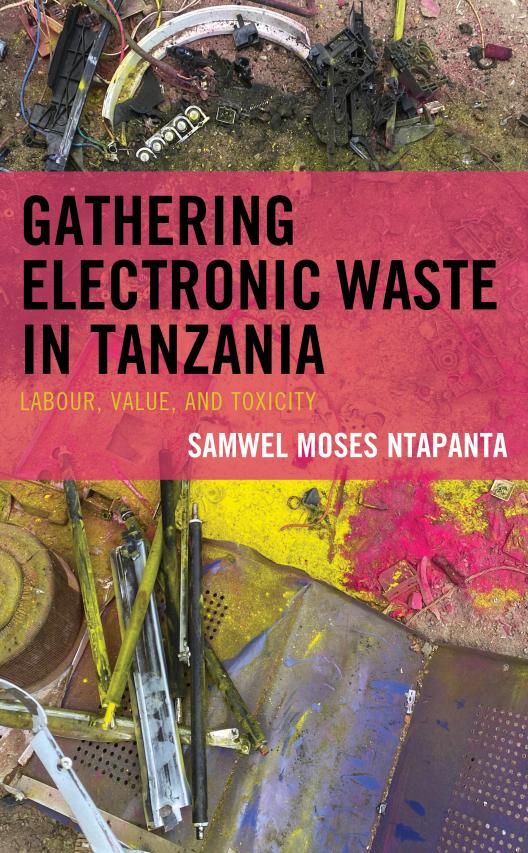
Dr Samwel Moses Ntapanta is an ethnographer specialising in contemporary urbanism along the western Indian Ocean coast, with a particular focus on East Africa. His research interests extend to themes of colonialities, consumption and discarding, repairing and recycling economies, and the anthropology of money. Currently, he is a Postdoctoral Fellow in Department of Anthropology, Aarhus University. He is also the author of Gathering Electronic Waste in Tanzania: Labour, Value, and Toxicity (Bloomsbury).